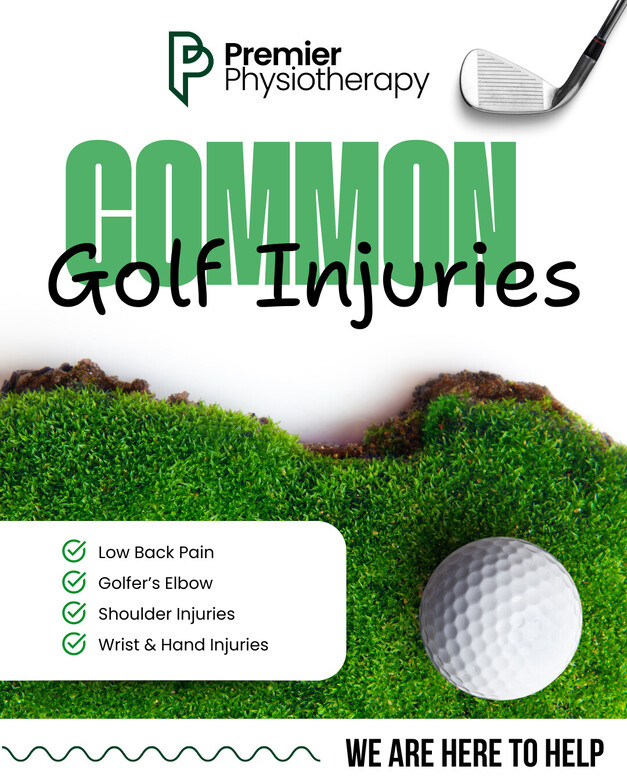
Golf is one of the most popular sports in Ottawa. Whether you're playing at local courses across the National Capital Region or spending weekends perfecting your swing, golf offers excellent physical activity and social connection.
While golf is often considered a low-impact sport, the repetitive nature of the golf swing places significant stress on the body. Over time, this can lead to pain, stiffness, and injury that may affect both performance and enjoyment of the game. Research consistently shows that low back pain, shoulder injuries, elbow pain, wrist injuries, and knee problems are among the most common golf-related injuries.
Physiotherapy can help golfers recover from injuries, improve mobility and strength, and reduce the risk of future problems.
Common Golf Injuries
Low Back Pain
Low back pain is the most frequently reported golf injury. The golf swing involves powerful rotation through the spine, and limited hip or upper back mobility can force the lower back to absorb excessive stress.
Common symptoms include:
- Stiffness after a round
- Pain during the follow-through
- Difficulty rotating
- Discomfort when bending or lifting
Many Ottawa golfers notice symptoms increase early in the season when returning to regular play after a long Canadian winter.
Golfer's Elbow and Elbow Pain
Despite the name, golfers can develop pain on either the inside or outside of the elbow. Repetitive gripping, poor swing mechanics, and frequent practice sessions can overload the tendons around the elbow.
Symptoms may include:
- Tenderness aroundn the elbow
- Pain during gripping or lifting
- Reduced strength
- Discomfort after hitting multiple balls
Shoulder Injuries
The shoulder plays a major role during both the backswing and follow-through. Repetitive swinging can contribute to rotator cuff irritation, tendon injuries, and shoulder impingement.
Common signs include:
- Pain when reaching overhead
- Difficulty during the backswing
- Night pain
- Weakness in the shoulder
Wrist and Hand Injuries
The wrists absorb significant force during impact, particularly when striking the ground or hitting from challenging lies. Repetitive stress can contribute to tendon irritation and joint pain.
Hip and Knee Pain
Golf requires efficient rotation through the hips and lower body. Limited hip mobility may increase stress on the knees and lower back. Many golfers experience discomfort during weight transfer and rotational movements.
Why Do Golf Injuries Happen?
Golf injuries often develop gradually rather than from a single incident. Common contributing factors include:
- Poor mobility
- Reduced strength and conditioning
- Repetitive overuse
- Returning to golf too quickly after winter
- Inadequate warm-up
- Swing mechanics that place excessive stress on joints and muscles
- Previous injuries
Many golfers focus solely on flexibility, but mobility, strength, and movement control are equally important for a healthy golf swing.
How Physiotherapy Can Help Golfers
A physiotherapist can assess the physical factors that may be contributing to pain or limiting performance.
Your assessment may include:
- Join mobility testing
- Strength evaluation
- Movement analysis
- Functional testing
- Review of your symptoms and goals
Based on the findings, a personalized treatment plan may include:
Manual Therapy
Hands-on treatment may help improve joint mobility and reduce stiffness in areas such as the spine, hips, shoulders, and wrists.
Exercise Prescription
Targeted exercises can help improve:
- Core strength
- Hip mobility
- Shoulder stability
- Balance and coordination
- Overall movement efficiency
Education
Understanding training loads, recovery strategies, and proper progression can help reduce injury risk and support long-term participation in golf.
Return to Golf Planning
For golfers recovering from injury, physiotherapy can help guide a gradual return to practice and play.
Injury Prevention Tips for Ottawa Golfers
Warm Up Before Every Round
A proper warm-up can prepare your muscles and joints for the demands of the golf swing. Mobility exercises for the hips, upper back, and shoulders are often beneficial.
Improve Hip Mobility
Limited hip movement often causes the lower back to compensate during the swing, increasing injury risk.
Build Core Strength
A strong core helps transfer force efficiently and may reduce stress on the spine during rotation.
Increase Activity Gradually
Avoid jumping from little activity to multiple rounds and long range sessions in a short period of time.
Address Pain Early
Small aches can become larger problems when ignored. Early assessment may help identify contributing factors before symptoms worsen.
Golf Physiotherapy in Ottawa
Golf should be enjoyable, whether you're playing recreationally, competing in tournaments, or simply staying active during Ottawa's golf season. If pain is affecting your swing, limiting your distance, or preventing you from playing comfortably, physiotherapy may help identify contributing factors and support your recovery.
At Premier Physiotherapy in Ottawa, our physiotherapists assess and treat a wide range of musculoskeletal conditions, including golf-related injuries.
Book and Assessment
If you are experiencing golf-releated pain or looking to improve your movement for the season, contact Premier Physiotherapy to schedule an assessment.
.jpg)