Winter in Ottawa means plenty of snow, and plenty of shoveling-related injuries. At Premier Physiotherapy Clinic in Ottawa, we regularly see patients with back pain, shoulder strains, and overuse injuries caused by shoveling techniques that put the body in positions optimized for strains. With a few physiotherapist-approved strategies and a little more body awareness, you can clear your driveway safely and reduce your risk of injury all season long.
Why Snow Shoveling Causes Injuries
Shoveling can be surprisingly demanding. It combines heavy lifting, repetitive movements, awkward postures, and cold exposure. Loading the body in these conditions reduces muscle efficiency and can lead to common injuries such as:
- Low back strains
- Neck and shoulder tension
- Shoulder and rotator cuff irritation
- Elbow and wrist pain
- Slips and fall-related injuries
Understanding the risks of placing the body in vulnerable positions and conditions can help you prepare for the demanding task of shoveling.
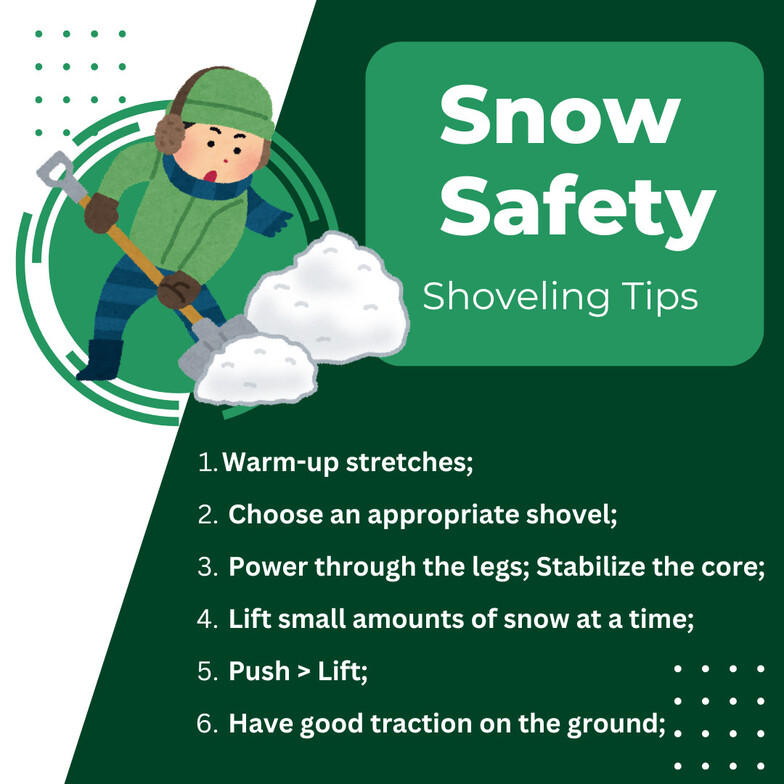
Tip 1: Warm Up Before You Step Outside
A quick 3-5 minute warm-up helps prepare your muscles and reduce your risk of strains.
Here are some generalized exercises you can do to warm up the body:
- Shoulder Rolls: Gently warms up the upper back and shoulder muscles, helping improve mobility and prepare your body for the repetitive motions involved in shoveling.
- Crossover Reaching: hHelps gently stretch the upper back and shoulder muscles, promoting mobility and preparing your body for the twisting and lifting involved in shoveling.
- Torso Twisting With Arms Out To The Side: Helps warm up the core and upper body, improving rotational mobility for safer, more comfortable shoveling.
- Hip Circles: This exercise gently mobilizes the hips and lower back, helping prepare your core and lower body for the bending and lifting motions involved in shoveling.
- Lunges: Strengthen the legs and glutes while engaging the hips, improving stability during stepping and lifting.
- Lateral (hip) Lunges: Target the inner and outer thighs and hips, enhancing lateral mobility and balance for safer snow removal.
- High Hinges: This exercise gently engages the hamstrings and glutes while promoting proper bending mechanics, helping protect your lower back during shoveling.
-
Squats: Squats strengthen the legs and glutes while promoting safe bending and lifting mechanics, helping reduce strain on the lower back during shoveling.
Tip 2: Use the Right Shovel
A shovel that’s too long, too short, or too heavy can increase stress on your back and shoulders. Standard scoop shovels are best for lifting and throwing snow. Flat-bladed pusher shovels are better for powder. Sleigh shovels are best for pushing large amounts of snow over a large area.
Tip 3: Power Through The Legs, Stabilize The Core
Back injuries often happen when twisting or bending while lifting snow. Keep these cues in mind to maintain a neutral spine:
- Hinge at the hips when bending over, not your low back.
- Keep the shovel close to your body, especially when lifting snow.
- Keep the knees bent.
- Engage your core gently before lifting.
- Use a strong position by staggering your stance (one foot forward and one back).
Tip 4: Lift Small Amounts of Snow at a Time
Lifting less snow more frequently is safer and reduces fatigue. Monitor your body for any aches or sore spots between every few reps. Take breaks before strains come on and warm up inside, as needed. If you have to strain to lift the snow, it’s too much snow.
Tip 5: Push Instead of Lifting
Whenever possible, use your shovel to push snow forward instead of lifting and throwing it. Pushing keeps your spine in a stronger position and minimizes load on the shoulders and arms. Minimize the load through the upper limbs and back by leaning your weight forward and powering through the legs.
Tip 6: Have Good Traction
Good traction on the feet reduces the risk of slips and falls. Wear supportive footwear and keep the paths salted.
When to Seek Physiotherapy
If you develop pain or soreness while shoveling that lasts longer than a couple days, physiotherapy can help. At Premier Physiotherapy Clinic in Ottawa, we provide:
- Assessment of your discomfort or injury in relation to lifestyle and movement patterns;
- Treatment for aches including muscle strains and joint pain;
- Interventions for unoptimized movement patterns;
- Mobility and strengthening programs to prevent further injury;
- Education on safe biomechanics and ergonomics, especially with lifting and daily activities;
Our goal is to help you recover comfortably and safely return to the activities that matter to you. Snow shoveling is part of winter life in Ottawa, but it doesn’t have to lead to pain.
If you’re dealing with persistent discomfort after shoveling, the team at Premier Physiotherapy Clinic in Ottawa is here to help with individualized, evidence-informed, and person-centred care.
.jpg)