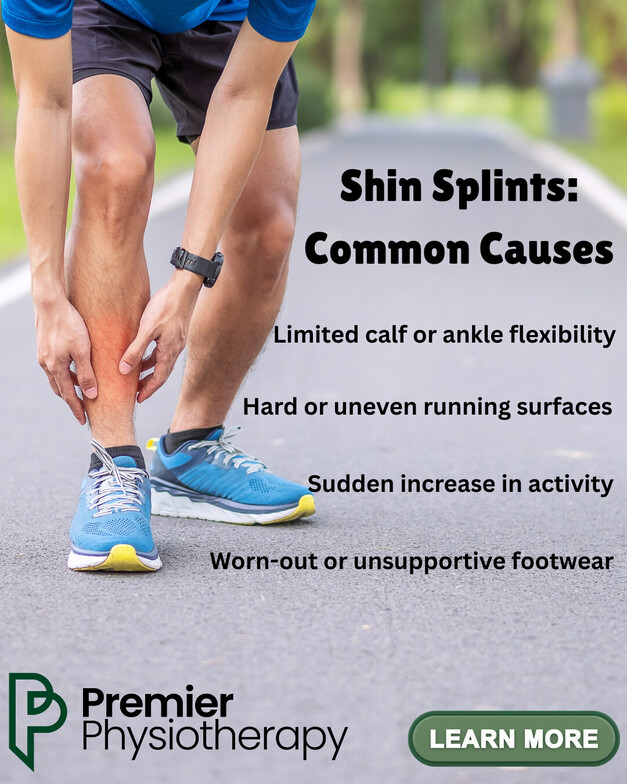
Shin splints can make walking, running, or staying active uncomfortable. One common cause is shin splints, also know as medial tibial stress syndrome. This condition often affects runners, athletes, and individuals who have recently increased their activity levels.
What Are Shin Splints?
Shin splints refer to pain along the front or inner edge of the lower leg (shin bone). This pain can develop when muscles, tendons, and bone tissue become stressed from repetitive activity.
Common Causes of Shin Splints
Shin splints are often linked to overload or stress on the lower leg. Here are the most common contributors:
Sudden increase in activity
Jumping into running, sports, or training too quickly can overload the shin structures.
Inadequate or worn-out footwear
Old or unsupportive shoes can increase stress through the lower legs.
Hard or uneven surfaces
Running on concrete or uneven terrain increases repetitive impact forces.
Muscle imbalances or weakness
Weak hips, calves, or stabilizing muscles can overload the shin area.
Limited flexibility
Tight calves or ankles reduce shock absorption during movement.
How Physiotherapy May Help
At Premier Physiotherapy in Ottawa, physiotherapists can assess your condition and develop a personalized plan based on your needs.
Your care may include:
- Education on activity modification and gradual return to exercise
- Targeted exercises to improve strength and flexibility
- Movement assessment to identify contributing factors
- Manual therapy techniques where appropriate
- Guidance on footwear and training habits
The goal is to support recovery and help you return to your usual activities safely.
Tips to Help Manage Shin Splints
Some general strategies that may help include:
- Gradually increasing activity levels
- Wearing supportive, well fitting footwear
- Incorportating rest and recovery days
- Stretching and strengthening lower leg muscles
- Avoiding sudden changes in training intensity
When to Seek Physiotherapy in Ottawa
If your shin pain is not improving, is recurring, or is limiting your ability to stay active, a physiotherapy assessment may help guide your next steps.
Book an Assessment
At Premier Physiotherapy Ottawa, we can supoort individuals in managing injuries and improving movement through evidence-informed care.
Contact us today to learn more or book an appointment.

.jpg)